
Arrest Warrants in St. Charles Parish
An arrest warrant is a judge's written order telling officers to bring a named person into custody. In St. Charles Parish, as across Louisiana, that power belongs to a magistrate, not to the police. Under Code of Criminal Procedure Art. 202, a complainant first swears to an affidavit describing the offense, and the magistrate then decides whether probable cause supports it. The warrant itself must satisfy Art. 203, which sets what the document has to contain. Locally, the 29th Judicial District Court issues process for felony and misdemeanor cases, the Clerk of Court keeps the record, and the Sheriff's Warrant section tracks and serves it. A justice-of-the-peace district can issue its own lower-court process on a separate route.
St. Charles Parish Warrant Affidavits and Probable Cause
Art. 202 covers the front end of a St. Charles Parish warrant. A complainant signs a written affidavit spelling out the offense, the time and place, and whatever identifying details are known. The magistrate weighs that statement and decides whether probable cause exists. Only then does a warrant issue. The same article also governs recall. This stage explains a lot. A warrant can sit active with no arrest ever made, and a person may have no idea it exists. It also explains why the investigative file behind the warrant can stay closed to the public even though the warrant itself is a court event. The statute authorizes an arrest and nothing more; guilt is a separate question for a courtroom.
What a St. Charles Parish Arrest Warrant Contains
Art. 203 lists what the written warrant must contain, and those elements are exactly what an official record should show a reader. They are also what make a warrant specific enough to act on. St. Charles Parish sources publish no fixed local numbering format, so ask the clerk which identifier to use when you call.
| Caption | The warrant identifies the State of Louisiana and the issuing authority. |
|---|---|
| Date and parish | The warrant shows when and where in the parish it was issued. |
| Subject | A name, or an identifying description when the name is not known. |
| Offense | The charged offense that supports the warrant. |
| Command | The direction to arrest the person and bring them before the court to be booked. |
| Signature | The magistrate's signature on the process. |
| Bail | An amount may be stated in a noncapital case when the magistrate has authority to set it. |
| Case identifier | Ask for the case or docket number along with the warrant number. |
The St. Charles Parish Arrest Warrant Tracking Chain
Three sheriff's offices stand behind every district-court warrant question in St. Charles Parish. The Special Operations Division handles fugitive apprehension and arrest-warrant tracking for the 29th Judicial District Court. The Criminal Records division maintains arrest records along with the arrest-warrant and attachment files that court generates. The Warrant section oversees active warrants in coordination with the correctional center and every enforcement division. None of these pages offers a public warrant lookup, a name field, or a searchable table. So the phone is the tool. Criminal Records answers at (985) 783-6237 and Special Operations at (985) 783-1135, both staffed on weekday business hours.
How St. Charles Parish Arrest Warrants Are Served
Art. 204 directs the warrant to peace officers and lets them execute it within their legal authority, which can reach across parish lines. The Warrant section confirms that from the street side. Active warrants sometimes have to be served outside St. Charles Parish, and the section describes coordination through a Jefferson Parish-based intelligence group spanning six parishes. Booking takes place at the Nelson Coleman St. Charles Parish Correctional Center, 5061 LA Highway 3127 in Killona, (985) 783-1164. That address is not an invitation. No public walk-in surrender window or bond-counter hours are published for the facility, so do not show up expecting one without a court instruction first.
What Stays Out of a St. Charles Parish Arrest File
An arrest warrant can be a public court event while the investigative file behind it stays sealed. La. R.S. 44:3 sets out the law-enforcement exemptions. The St. Charles Parish Sheriff's public records page states that criminal offense records other than an initial report are generally privileged until adjudicated. It also names limits on investigative reports, supplemental reports, statements, undercover officer identity, juvenile material, sexual-offense victim identity, security procedures, and confidential-source material. Juvenile records remain confidential under Children's Code Art. 412. A requester can still ask narrowly for a releasable document and for the legal basis behind anything withheld. Just know that a warrant check is not a way into an investigative file.
St. Charles Parish Arrest Warrant vs Summons
Three documents get confused, and the difference decides whether a person stays free or faces custody in St. Charles Parish. A summons is a command to appear. An arrest warrant authorizes custody. A bench warrant follows a failure to comply with a court order. All three can appear in one case at different stages.
| Point | Arrest Warrant | Summons | Bench Warrant |
|---|---|---|---|
| What it does | Authorizes arrest and booking | Orders an appearance | Enforces a court obligation |
| Trigger | Affidavit and probable cause | Charging decision without custody | A missed date or condition |
| Issued by | A magistrate or judge | The court | The judge in the case |
| What clears it | Bond, counsel, and appearance | Appearing as directed | A new setting, payment, or recall |
A St. Charles Parish summons is not an active arrest order, and treating it as one causes needless panic.
Federal Warrants and St. Charles Parish
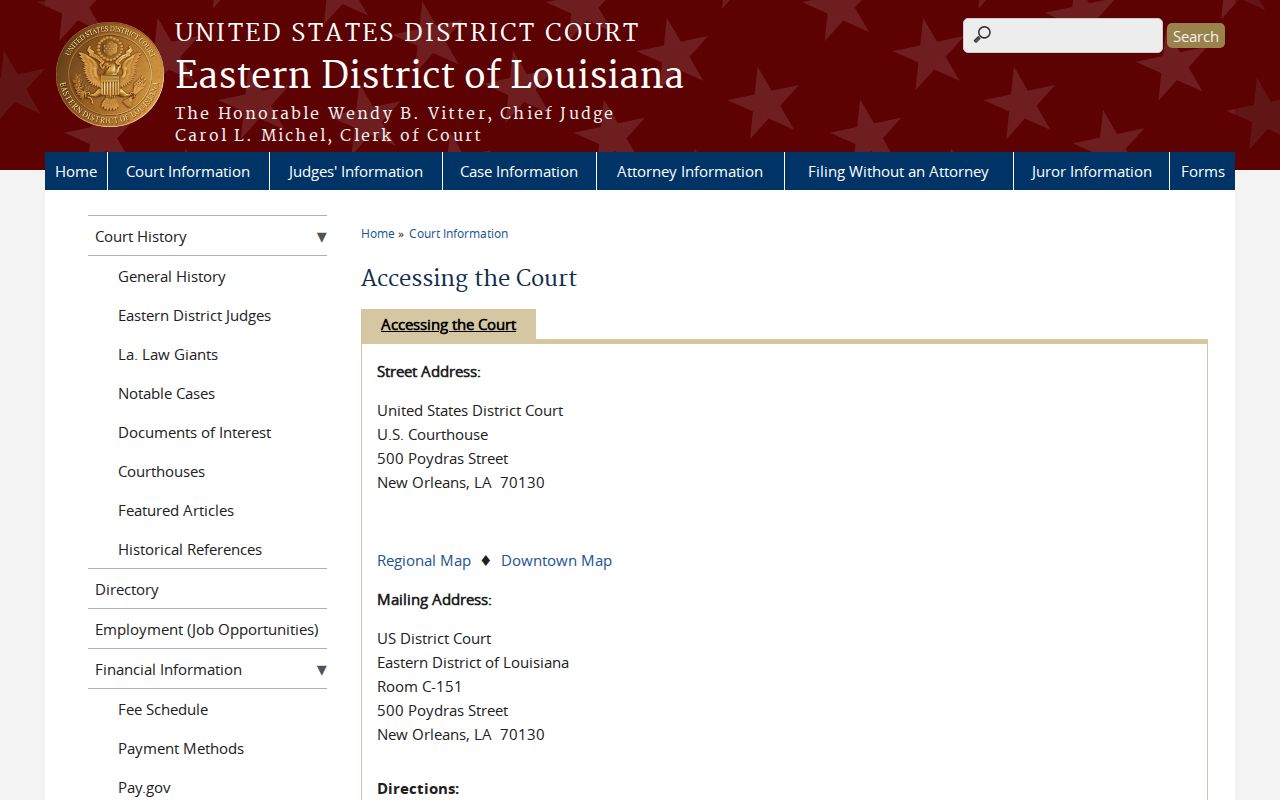
Federal warrants follow a different track from parish process. St. Charles Parish sits in the Eastern District of Louisiana, whose courthouse stands at 500 Poydras Street in New Orleans, with the clerk's office at (504) 589-7600. The Sheriff's Federal Assignments page describes five investigators assigned to task forces with the U.S. Marshals Service, the DEA, the FBI, and the Secret Service. The Marshals Service lists St. Charles among the participants in the Gulf Coast Regional Fugitive Task Force. The federal courthouse page posts location and access details for visitors.
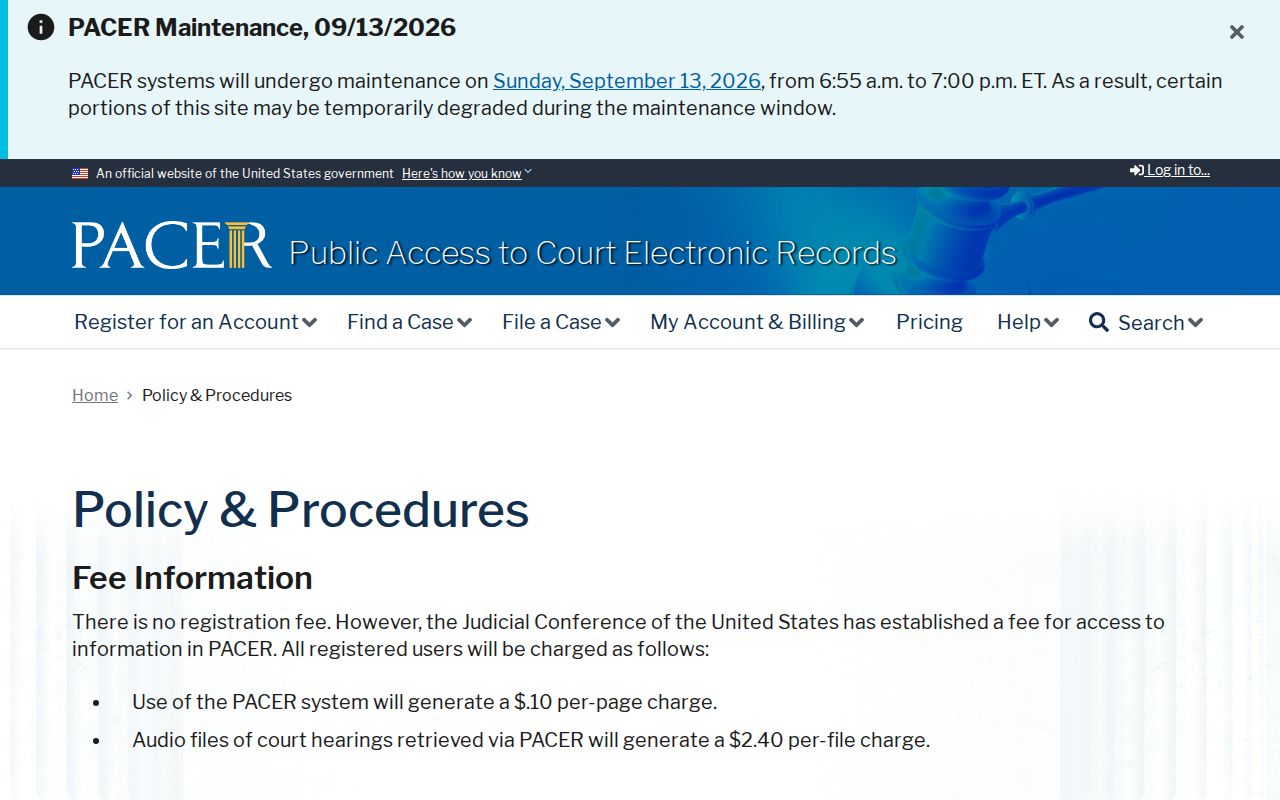
For federal warrant records tied to St. Charles Parish, PACER is the public system for dockets and filings. It bills by the page, though a small quarterly waiver applies, and the linked page spells out the fees and policies.
Keep the tracks straight in St. Charles Parish. A parish records request cannot clear a federal warrant, and a federal docket cannot clear a JP warrant.
Handling a St. Charles Parish Arrest Warrant
An Open Arrest Warrant Is Not Something to Test. Contact a licensed Louisiana attorney before you act. Do not flee, do not conceal, and do not walk into a jail or courthouse until the issuing court or an authorized Sheriff office has told you which office to report to and what procedure applies.
Only the issuing court can fix a St. Charles Parish arrest warrant, because only the court controls it. Options may include posting bond, appearing at a setting, or filing a motion to recall or quash. Which one fits depends on the case, not on a general rule. Paying a fine counter does not clear an arrest warrant unless the court directs it. Before you act, ask the court a few direct things. Find out whether an appearance is required before release, whether bond has been set, and whether the Sheriff's office wants advance notice of a surrender. Write down each answer with the date and the name of the person who gave it. The home page walks through the attorney, court, and confirmation sequence in more depth.
St. Charles Parish Warrant Questions to Ask
An office in St. Charles Parish answers only the question you ask, and a vague call usually ends in a referral. Keep questions short and specific. Write the answers down with the date. If an office will not release a detail, ask for the legal basis or a referral to the office that holds the warrant record.
- Which court or JP district issued the warrant, and what is the case number?
- What type of process is it, and is it still active today?
- Has bond been set, and is the amount public?
- What office controls the next step, and what does it require?